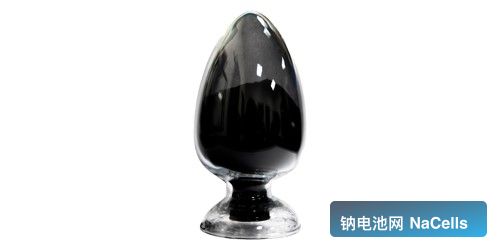
Hard Carbon Anode Material
Model: NA-1
Specifications
| Specification | Initial reversible specific capacity ≥300mAh/g |
|---|---|
| Specification | Initial Coulombic efficiency ≥88% |
| Specification | Initial reversible specific capacity ≥320mAh/g |
| Specification | Initial Coulombic efficiency ≥90% |
| Specification | Initial reversible specific capacity ≥350mAh/g |
| Specification | Initial Coulombic efficiency ≥91% |
| Specification | Initial reversible specific capacity ≥380mAh/g |
| Specification | Initial Coulombic efficiency ≥92% |
Description
Reeds have the advantages of wide availability and low cost, making them a typical biomass hard carbon raw material. They possess strong regenerative capacity, are rich in cellulose and lignin, and have a high carbon yield. The unique honeycomb-like porous structure inside reed rhizomes facilitates the insertion and extraction of sodium ions in sodium batteries, providing numerous active sites for sodium storage, making them a high-quality hard carbon anode material. Based on years of systematic research, the Sodium Era innovation team has overcome the "bottleneck" of foreign hard carbon anode technology and innovatively developed a new process for preparing high-performance sodium battery hard carbon anodes from biomass reeds. This establishes an industrial chain from reed biomass raw materials to high-performance hard carbon anodes, sodium-ion batteries, and energy storage systems. Based on an estimated annual production of 100,000 tons of reed-based hard carbon anode materials, this can achieve the resourceful, clean, and high-value utilization of 500,000 tons of Dongting Lake reeds. The projected output value exceeds 15 billion yuan per year, creating over 2,000 new jobs, with significant economic, social, and ecological benefits.
🔒 Login to view contact info
Login →