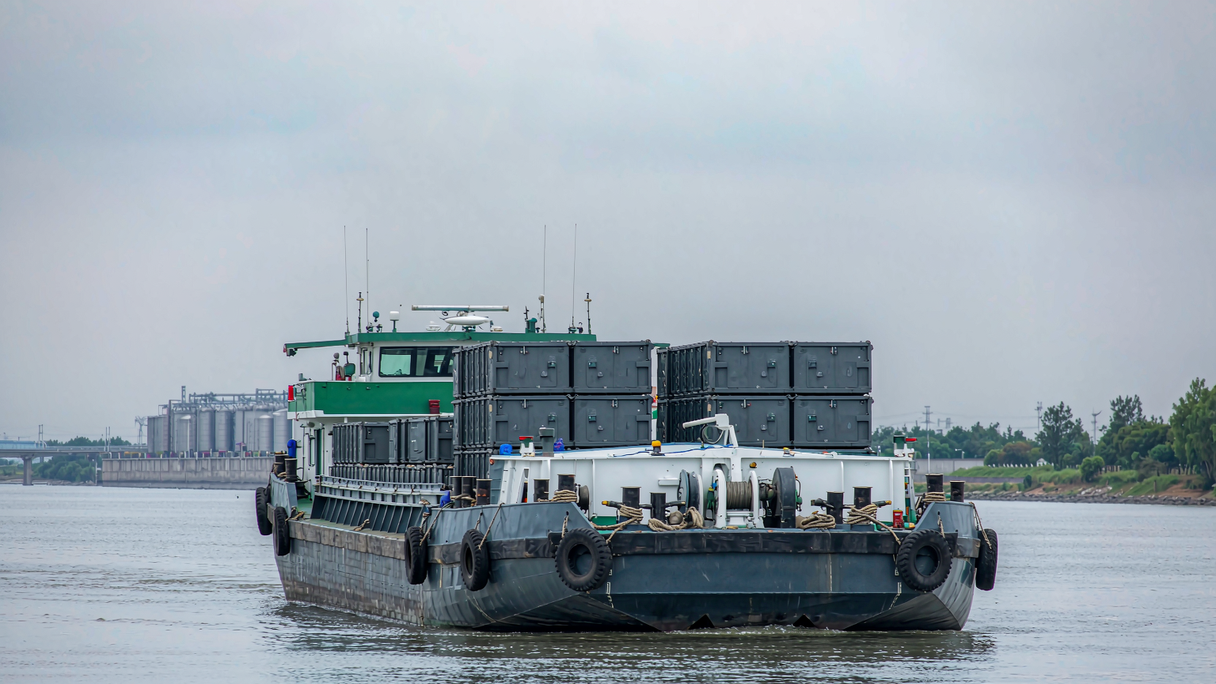
On November 24, the China Classification Society (CCS) presented a type approval certificate for a marine sodium-ion battery pack to Hangzhou Haichuang Automation Co., Ltd., a wholly-owned subsidiary of Changshu Guorui Technology Co., Ltd. (Guorui Technology), in Tianjin. According to CCS, the certificate is the first of its kind for a marine sodium-ion battery pack in China, offering a new power option for the electrification of inland and coastal vessels.
According to China Transport News, the approved sodium-ion battery pack operates across a temperature range of -40 to 70 degrees Celsius, supports 2C continuous charge and discharge, delivers a cycle life of 6,000 cycles, and carries an IP67 protection rating. Its cells remained stable in overcharge, over-discharge, thermal runaway and short-circuit tests as well as nail-penetration and gun-shoot tests. The pack is suited to passenger ships, official vessels and research vessels, covering low-temperature operation, short-distance high-frequency service and rapid recharging needs.
Guorui Technology formed a technical team with China Power New Energy Research Institute Co., Ltd. and other partners, confirming safety indicators through simulation, test verification and equivalence demonstration, and building an evidence chain covering the cell, battery pack and shipboard application scenarios before passing the design, production and quality-control audits. Guorui Technology has previously completed type certification for marine electric-drive, energy-storage and power-control ("three-electric") systems and built the electric container ship Qingdian 001.
As for marine sodium-battery certifications, the sodium-ion battery system of LiFun New Energy obtained CCS type approval in August this year; the certificate announced this time covers Guorui Technology's battery pack product, with the two falling under different product levels of system and pack. Type approval is a product-access certification and does not constitute actual orders or onboard installations; the commercial adoption of these products in the shipping market remains to be disclosed.