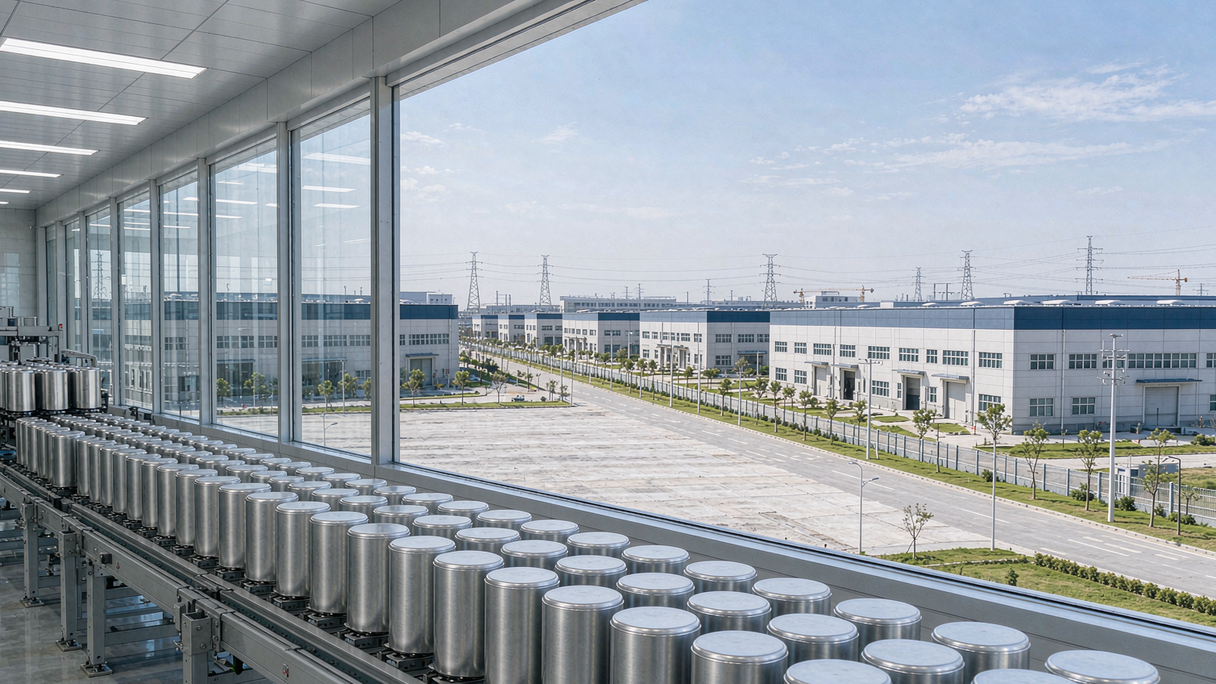
On September 24 (11:17 ET), CBAK Energy Technology Limited (NASDAQ: CBAT) announced via GlobeNewswire that it has signed an investment agreement with the Nanjing Gaochun Economic Development Zone to research, develop and manufacture large cylindrical sodium-ion battery cells and integrated battery systems in Nanjing, Jiangsu Province, adding 12GWh of annual cell production capacity. Per the press release, the 12GWh project's production lines will be designed to manufacture large cylindrical sodium-ion or lithium-ion cells, with the chemistry determined by market conditions and customer demand; the project covers cell manufacturing as well as module and battery pack integration, and will proceed in phases based on financing, customer demand and project readiness, planned for the second half of 2027 subject to securing financing.
The company separately disclosed an expansion at its existing Nanjing facility: to meet strong demand for Model 60150 large cylindrical cells, it plans to add 6GWh of annual capacity in the second half of 2026. The facility currently has 4.5GWh of annual Model 32140 cell capacity, which would rise to 10.5GWh after the expansion. The company is weighing two Model 60150 lines against a combination of one 32140 line and one 60150 line, with cell models and line configuration subject to adjustment.
The press release includes company-side revenue estimates: the 6GWh expansion could generate an estimated RMB 2.4-2.7 billion (approximately US$356-400 million) in annual revenue at full capacity with all output sold, while the 12GWh project, benchmarked at current lithium-ion cell market prices, could add an estimated RMB 4.8-5.0 billion (approximately US$712-741 million) annually - figures the company notes assume a full year of full-capacity operation, are not guidance for any reporting period, and do not represent contracted sales.
This is an investment agreement signing - planned capacity does not equal actual capacity, and project construction and ramp-up depend on financing, customer qualification and market conditions; the RMB 4.8-5.0 billion estimate is benchmarked at current lithium-ion cell prices and is not guidance.