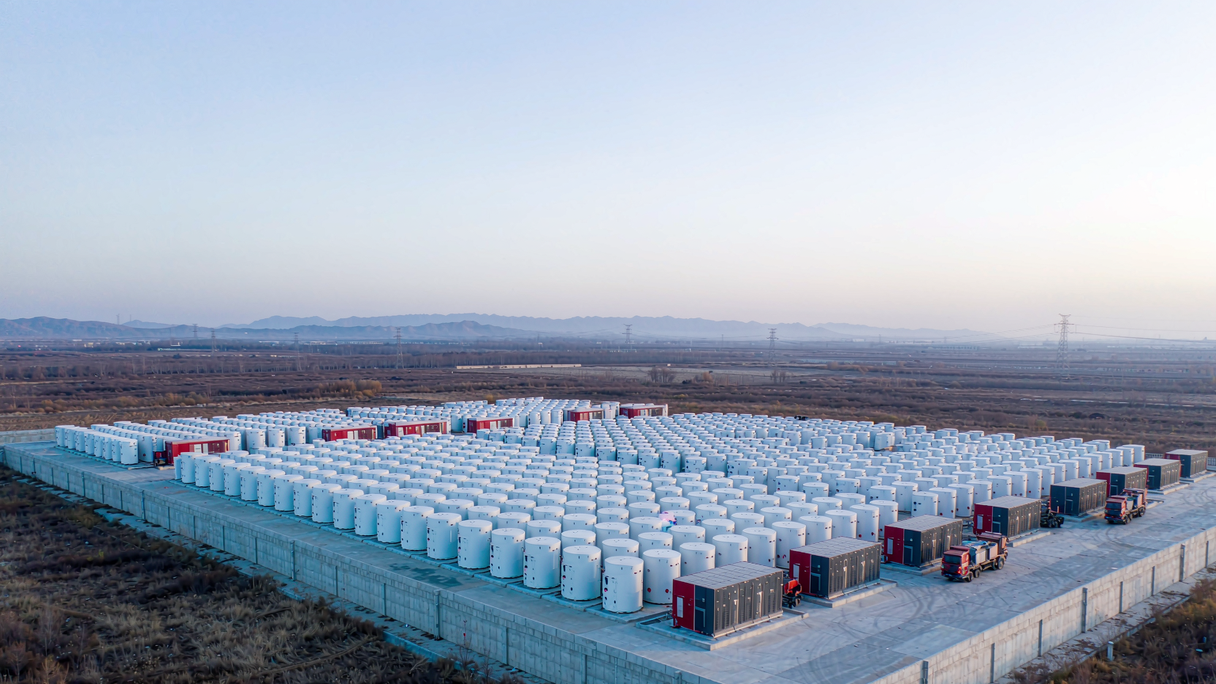
On September 22, China Sodium Electric Power Group (CNAEPower) and Shenzhen CLOU Electronics jointly disclosed that the complete equipment set for their Qinhuangdao 20MW/80MWh sodium-ion energy storage project passed factory inspection and was shipped, completing delivery. The purchase agreement was signed on March 4 at CLOU's Shenzhen headquarters with a total contract value of nearly RMB 100 million. Under the agreement, CNAEPower supplies the full sodium-ion storage equipment scope, covering power conversion and step-up systems and battery containers, with polyanionic-route sodium-ion cells plus a battery management system (BMS), intelligent thermal management and a perfluorohexanone fire-suppression system. The shipment marks the project's transition to on-site installation and grid-connection implementation.
On technology and application fit, the project targets low-temperature winter operation in northern China: by the supplier's account, its sodium-ion cells retain a relatively high capacity at -40 degrees C, fitting Qinhuangdao's cold winters; on cost, the sodium cathode uses iron and manganese and the anode current collector replaces copper with aluminum foil, cutting overall material cost by more than 30% versus lithium-ion (company and media figures, without third-party verification). On manufacturing, industry media report that CNAEPower's Yangzhou base has annual capacity of 1 GWh of full-tab large cylindrical cells and 5 GWh of module and PACK lines, enabling cell-to-system delivery. The buyer, CLOU Electronics, is the energy-storage listing platform under Midea Group, developing PCS, BMS and EMS technologies alongside sodium-ion and flow-battery routes.
Matters - equipment delivery means the set has passed factory inspection and shipped; it does not mean the station is commissioned or grid-connected. The 20MW/80MWh figure is the project's configuration scale, the "nearly RMB 100 million" is the enterprise's disclosure at signing, and the final settlement value is undisclosed. From signing in March to delivery in September took about half a year, making this one of the earlier cases of system-level equipment delivery for sodium-ion storage in a northern independent-storage scenario, with media highlighting the engineering validation in cold climates.