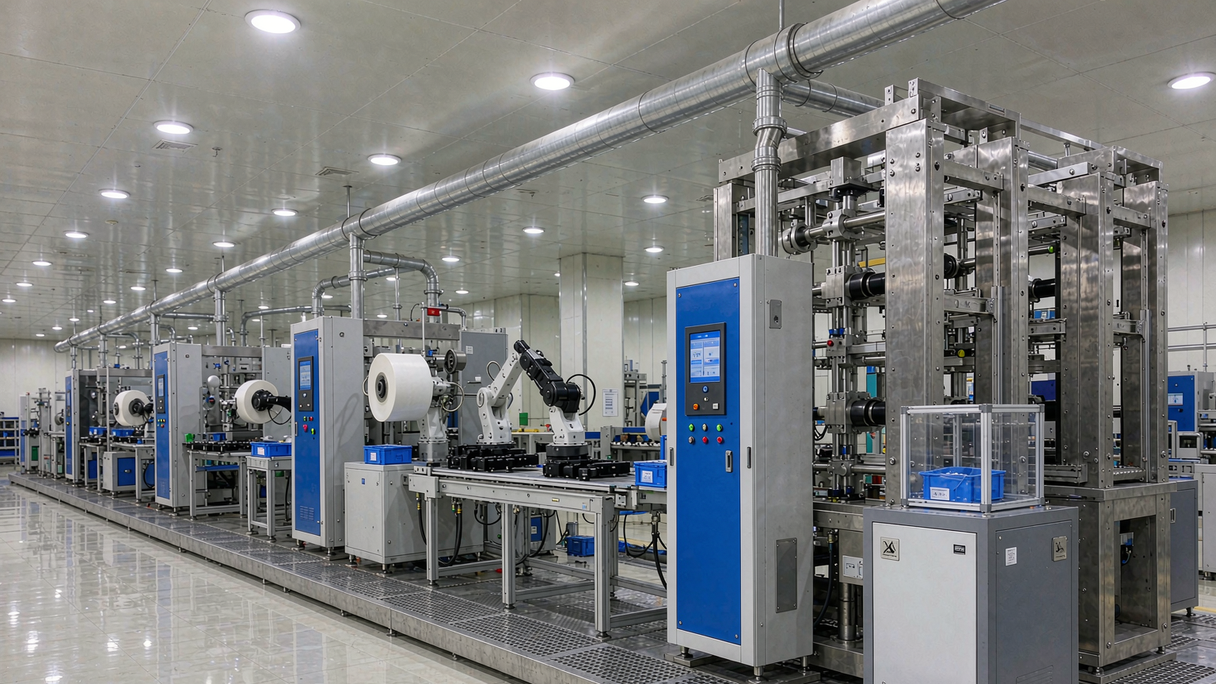
On September 20, the Management Committee of the Luquan Economic Development Zone, Shijiazhuang, Hebei Province, published an approval-decision announcement on its government website regarding the environmental impact report (EIA report form) of Hebei Jingye New Energy Technology Co., Ltd.'s project to build a new 1 GWh sodium-ion cell and energy-storage integration production line. Having completed its review, the committee has made an approval decision on the project; the public notice period runs 5 working days from the date of the announcement, which also sets out rights to administrative reconsideration and administrative litigation. The project site is southwest of the intersection of Wangfo Road and Xintai Street in the Luquan Economic Development Zone. The EIA process has now passed through three stages: acceptance (September 7), proposed-approval notice (September 14), and the approval decision (September 20).
On background: Hebei Jingye New Energy Technology Co., Ltd. Is the new-energy arm of Hebei Jingye Group, a private steelmaker based in Pingshan County, Shijiazhuang that has in recent years expanded into new energy, with businesses spanning photovoltaics and energy-storage cabinets. The sodium-ion cell project is its entry into battery manufacturing. Earlier, on August 24, Jingye Group's new-energy company announced the tentative winning bidder for the front-end equipment procurement and installation of its 1 GWh Na/Li-compatible production line — Guangzhou Jingin River Intelligent Equipment (Jinhe Equipment), with a bid of CNY 39.8 million. Equipment procurement and EIA approval have advanced in parallel, indicating the project is in substantive progress. The cell line is designed to be Na/Li compatible, allowing product switching based on market conditions.
The granting of EIA approval is a key prerequisite before construction of a manufacturing project can begin, meaning the site and environmental measures have passed administrative review; however, approval does not equal construction start, let alone production. Total project investment was not disclosed in the approval announcement or the earlier proposed-approval notice; 1 GWh is planned capacity, not actual capacity; the equipment tender is still at the tentative-award stage.