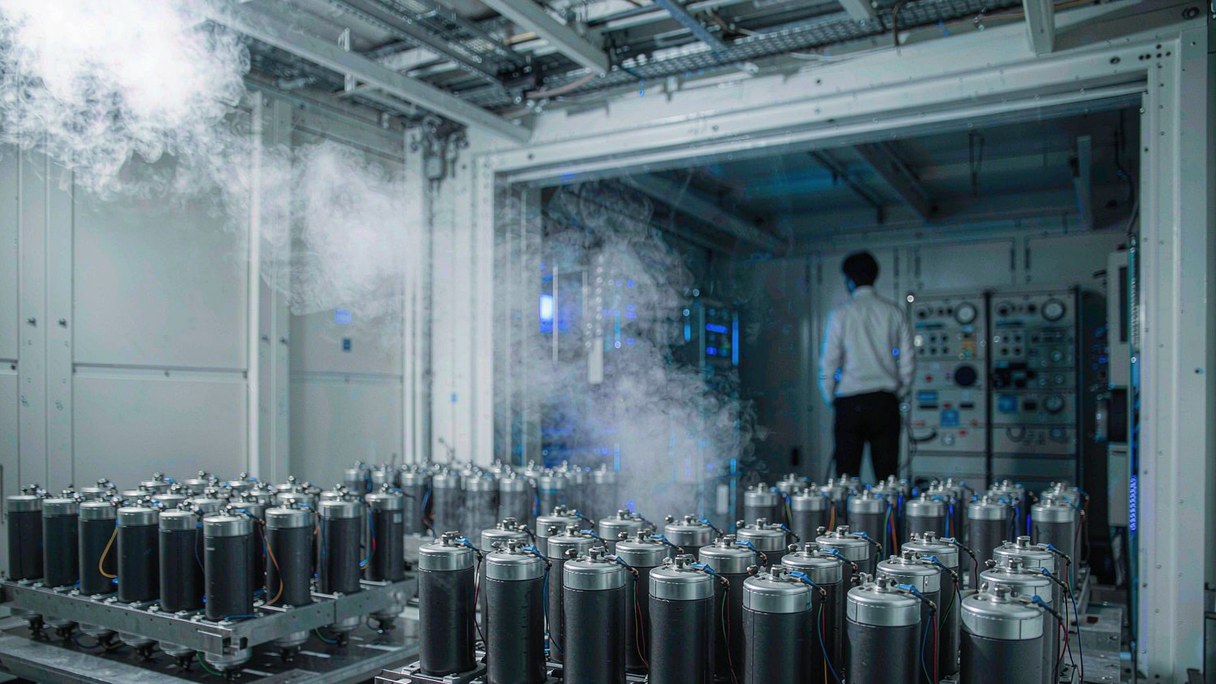
According to the official press release (GlobeNewswire, September 14, 2026) and Altris' news page, Altris (Sweden), Clarios (United States) and InoBat (Europe) jointly announced significant progress in sodium-ion battery technology development. Over the past months, the partners completed a new phase of validation activities, including summer validation under demanding operating conditions and evaluations with key customers across automotive, heavy-duty, off-highway, commercial vehicle and intralogistics segments. The results confirmed stable sodium-ion performance under demanding conditions and reinforced the relevance of the current cell design; cold-cranking capability has been extended to as low as -40 degrees C, a significant advancement in sodium-ion low-temperature performance. No cycle-life or energy-density figures were disclosed in the release.
In terms of the partnership structure, the progress builds on the long-term collaboration between Altris and Clarios under the Joint Development Agreement centered on the Power Sodium platform, combined with InoBat's cell development and manufacturing expertise. The next phase will use InoBat's Volta facility in Slovakia - an operational pilot manufacturing site combining R&D, testing and small-scale production - to advance from prototype development toward pilot-scale and small-series production readiness.
On materials, Altris' Fennac Prussian White cathode active material contains no lithium, nickel or cobalt and can be produced in Europe at scale; Altris CEO Christer Bergquist noted that automotive low-voltage is among the most demanding validation environments for sodium-ion technology and that the material has come through it. InoBat co-founder and CEO Marian Bocek positioned Na-ion as an enabler for a sovereign and secure western supply chain. The technology route is Na-ion (not sodium-sulfur); Clarios is a leading global low-voltage battery supplier whose sodium solution targets high-power scenarios such as starting and 12V/48V auxiliary power rather than main traction batteries.
The current result is validation progress and pilot readiness - no capacity figures, production timeline or customer design wins were disclosed; validation progress does not equal commercial products, and it is too early to judge the impact on the existing low-voltage battery market.