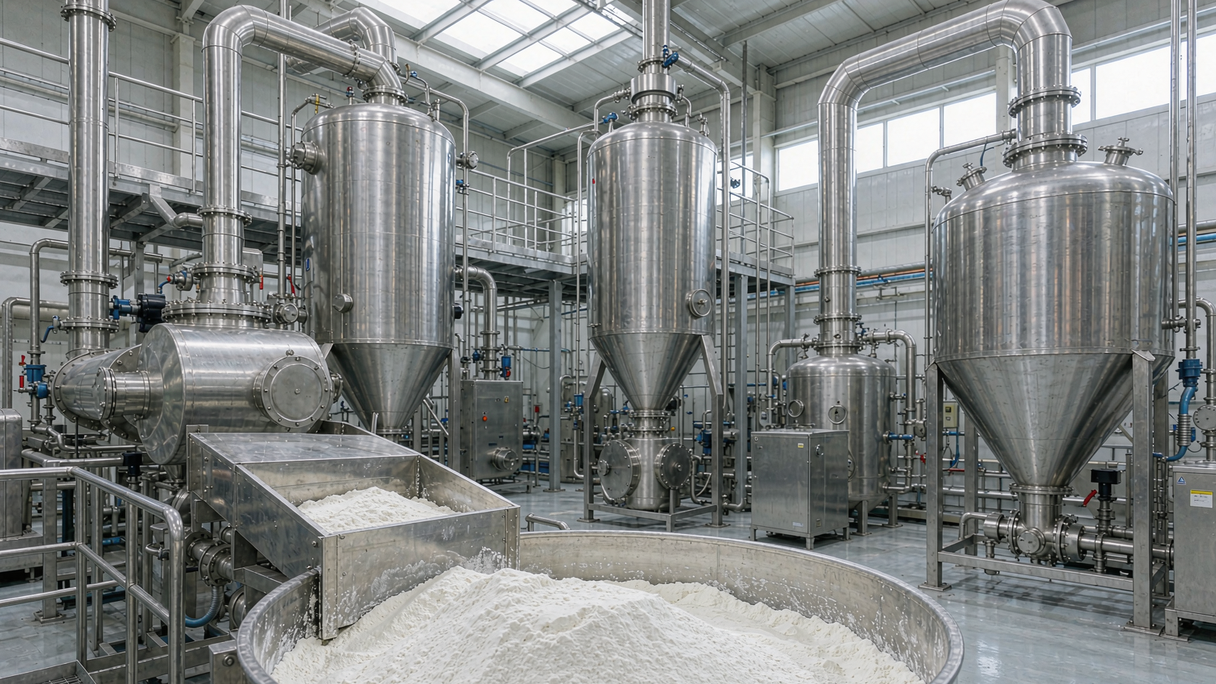
The environmental impact assessment (EIA) draft for public comment of Shanxi Xiang'an Energy Technology's 30,000 t/y sodium-ion battery materials project was recently published in the Changzhi Daily. According to a September 9 report by China Battery Industry Network (with the original notice attached), the project is located in the Xiangyuan Economic and Technological Development Zone (Datong Land Development standardized plant) in Changzhi, Shanxi, with total investment of RMB 533.5 million.
It adopts a leased-plant model (9,165 sqm of existing workshop), installing two sodium-ion cathode material lines and one anode line, plus new utilities (air compression, nitrogen generation, refrigeration) and storage/environmental-protection works. Upon completion it will produce 25,000 t/y of cathode and 5,000 t/y of anode materials - 30,000 t/y combined - mainly supplying storage-cell makers. The EIA report draft is complete; per the public-participation rules, comments may be submitted for 10 working days from the notice date, and the full report is downloadable via the developer's website (sxxa.com.cn).
On materials routes, the report speculates the cathode may be sodium iron pyrophosphate (NFPP) and the anode sodium titanium phosphate (media speculation; the company has not officially disclosed). NFPP is among the fastest-commercialized polyanion routes with the highest shipment share, offering high safety, long cycle life, wide temperature range and low cost; hard carbon dominates the anode side. Xiangyuan Development Zone is a key chemical-industry park in Changzhi, and the leased-plant model mirrors the approach of Guizhou Nabang's phase-one 5,500 t/y NFPP project (EIA first notice August 10), though at a much larger single-phase scale. Industry backdrop: global sodium-ion shipments reached 9 GWh in H1 2026, up 143.2% YoY (SPIR data), and cathode/anode capacity announcements keep landing; Shanxi already hosts sodium materials chains such as Huayang Group's coal-based hard carbon.
The project is only at the EIA draft public-comment stage - public comment is not approval, approval is not construction start, and construction start is not production; the materials routes are media speculation; the investment and capacity are planned figures from the notice, and planned capacity is not actual capacity.