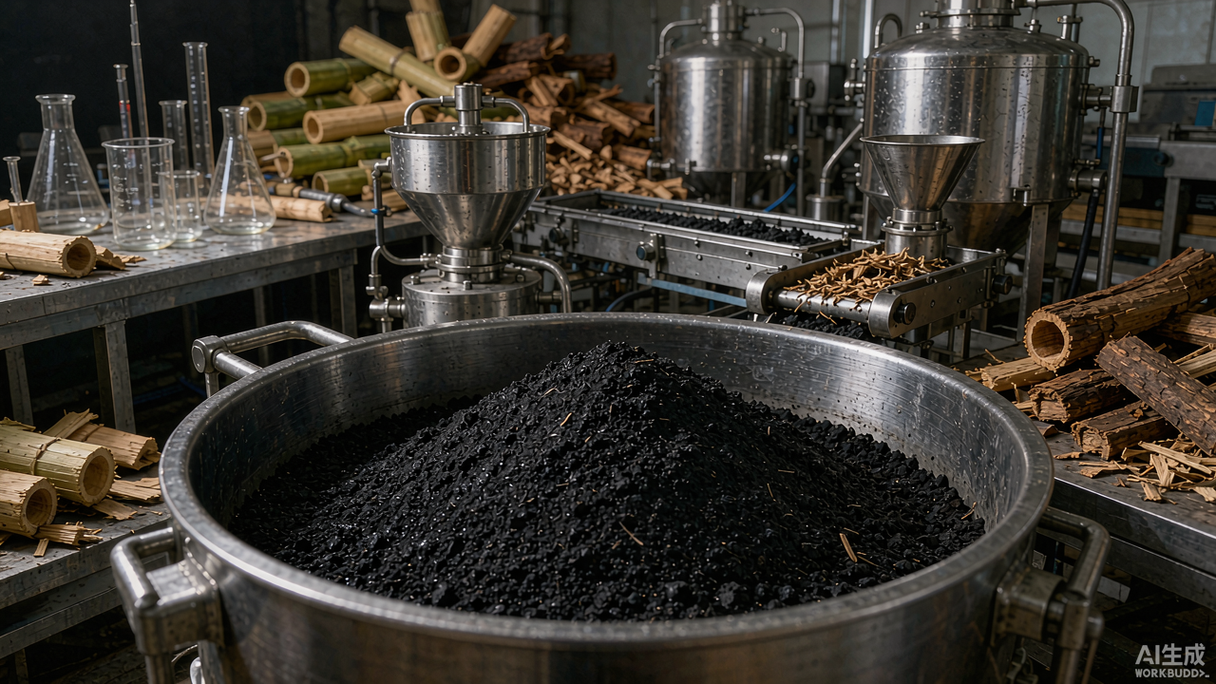
On August 30, according to Sina Finance citing MyBattery, the environmental assessment (EA) for Jinyun Quanyun Energy Technology Co., Ltd.'s 20,000-tonne-per-year sodium battery precursor material project entered full-text disclosure. The disclosure shows the company was founded in March 2024, specializes in biomass pellet manufacturing, is located in Xinbi Industrial Park, Jinyun County, Lishui, Zhejiang, and rents 7,000 square meters of idle plant from Jinyun Xurui Industry & Trade; its existing project produces 70,000 tonnes of wood biomass pellets per year. With growing demand for sodium-battery biomass precursor materials, this expansion will give the company an annual capacity of 20,000 tonnes of sodium battery precursor materials.
Regarding the technical route, the project uses bamboo powder as the main feedstock (bamboo ratio ≥70%) together with wood blocks, industrial wood chips, straw and spent mushroom substrate, to produce sodium-ion battery-specific biomass precursor materials as upstream feedstock for hard carbon anodes (no subsequent carbonization step); relying on the natural porous fiber structure of agricultural-forestry biomass, the formed products offer pore systems adapted to sodium-ion intercalation/deintercalation and serve as core precursor materials for sodium hard carbon anodes, with output directed to sodium cell manufacturers.
Biomass hard carbon is one of the mainstream sodium anode routes, whose precursors have mostly been coconut shell and phenolic resin; large-scale use of bamboo feedstock adds a new regional source of anode precursors, and Zhejiang itself is a concentrated region for sodium anode and cell capacity. The report also cites the 'China Sodium-Ion Battery Industry White Paper (2026)' by EVTank, Yiwei Economic Research and the China Battery Industry Research Institute: China's sodium-ion battery shipments reached 8.1GWh in 2025 and are projected to reach 435GWh by 2030.
EA disclosure is one step in the approval process - disclosure does not equal approval, let alone construction start; the product is upstream precursor material for hard carbon anodes, not finished hard carbon anode product, with different value from final anode products; the cited industry shipment figures (8.1GWh in 2025, 435GWh by 2030) are third-party forecasts.