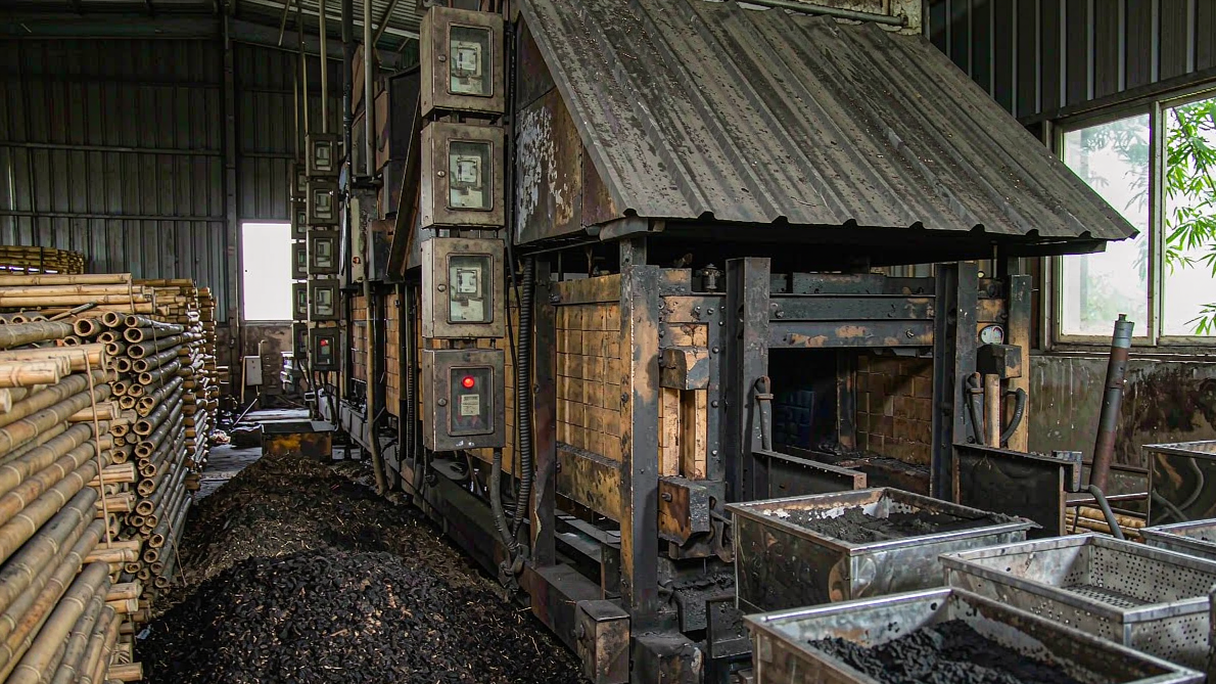
On August 28, the third roadshow of major projects under Hunan Province's 'Big Project Planning' initiative was held in Changsha, focusing on the new energy industrial chain, with eight selected key projects presented, including Hunan Na-Ke New Materials Co., Ltd.'s 50,000-tonne annual sodium-ion battery hard carbon anode material integrated production base project. According to Hunan Daily - New Hunan client, the project relies on Central South University's technical team and Hunan's abundant bamboo resources, integrating 'raw material pretreatment - high-end precursor - hard carbon anode material', with a Phase I 5,000-tonne line already under construction and expected to reach full capacity by year-end. A Hunan Provincial Development and Reform Commission official said the province will coordinate land, funding and energy consumption guarantees and track implementation.
Hard carbon is the only mainstream anode material for sodium-ion batteries and the most critical upstream 'chokepoint' in the industrial chain. Public information shows that China's effective hard carbon capacity in 2026 is only about 35,000 tonnes, with the coconut shell route relying on imports for 98% of raw materials; Hunan Na-Ke uses a bamboo biomass route, leveraging Hunan's bamboo resources to localize raw materials. Other new energy projects in the same roadshow include Hunan Anneng Future Energy's 20GWh storage battery and supporting new materials project (total investment CNY 12.67 billion), Chunhua Hydrogen Energy's industrial base, and Shanghai Jiuxing New Energy's heavy-truck battery-swapping system project.
'Phase I 5,000 tonnes under construction, expected to reach full capacity by year-end' is the project party's disclosure, and actual timing depends on construction and commissioning; 50,000 tonnes is the planned total capacity, with Phase I only 5,000 tonnes, and subsequent expansion remains uncertain; a roadshow is a promotion and resource-guarantee stage, not landed capacity.