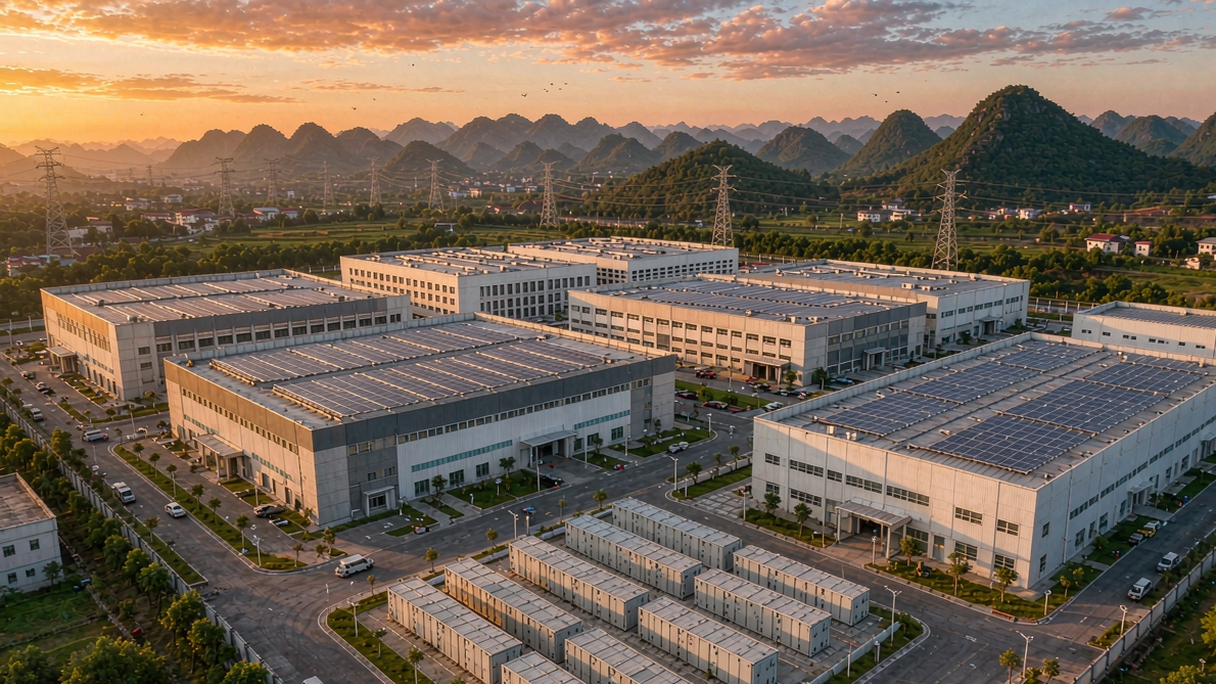
On August 28, Phase I of the Changyi Sodium Battery (Yunnan) Energy Storage project - with annual capacity of 3GWh of sodium-ion energy storage cells and 1GWh of battery PACK - officially started production in the Ning'er area of Simao Industrial Park, Puer City, moving the project from construction into operation. According to Yunnan Radio and Television Station's Yunnan TV, the Phase I plant covers more than 15,000 square meters and focuses on polyanionic sodium-ion battery technology and products, serving utility-scale and C&I energy storage scenarios. The project has so far received CNY 150 million in investment and is expected to generate annual output value of CNY 1.2 billion and CNY 30 million in taxes and profits at full capacity. Construction of the project started on May 19, 2025, and it was listed among Yunnan Province's major industrial projects that broke ground in Q2 2025.
Changyi Sodium Battery (Yunnan) Energy Storage Technology Co., Ltd. Was established in September 2024, wholly owned by Zhejiang Changyi Sodium Battery Energy Storage Co., Ltd., and is located in Ning'er Hani and Yi Autonomous County, Puer City, Yunnan. Under the overall plan, the base will subsequently expand with Phase II (3GWh cells and 1GWh PACK) and Phase III (30,000 tonnes per year of sodium iron phosphate pyrophosphate (NFPP) cathode material). When all three phases are complete, the base will form annual capacity of 6GWh of cells, 2GWh of battery packs and 30,000 tonnes of cathode materials, creating about 500 local jobs and becoming the largest sodium-ion battery production base in Yunnan, further integrating the industrial chain from cathode materials to cells, PACK and storage systems.
The 'annual output value of CNY 1.2 billion at full capacity' is a company/official disclosure and actual ramp-up and orders remain to be verified - planned capacity does not equal actual capacity; Phase I focuses on cell and PACK manufacturing, while self-supplied cathode materials (Phase III 30,000-tonne project) are not yet built, so the material segment still depends on external supply.