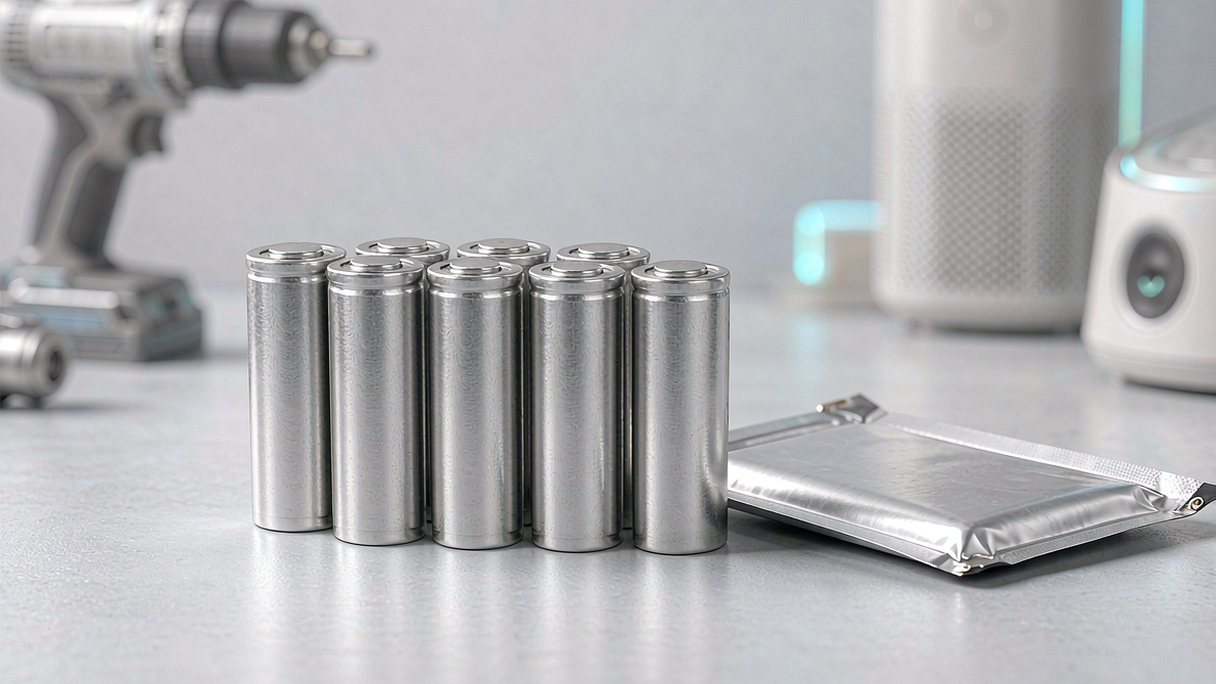
On August 27, multiple industry outlets — including GGII Sodium-Ion (Battery China edition) and Mariana Sodium-Ion — simultaneously republished content disclosed via Zhongna Energy's official WeChat account: Zhongna Energy is advancing its sodium-ion product line into the consumer market (e-power tools, smart toys, portable small appliances, etc.) via the combination of NFS (sodium ferrous sulfate, Na-Fe-S-O) cathode and an anode-free architecture. The company says the pouch-format cell has reached 180 Wh/kg, on par with LFP batteries; the 18650 cylindrical cell delivers 1,000 mAh, with the R&D team continuing to iterate materials formulation and process to lay a technical foundation for subsequent extension into premium consumer and power applications.
According to the company's disclosed figures, the technology highlights are threefold. First, fundamental compatibility: Zhongna's self-developed NFS cathode has a stable polyanion framework, and the anode-free cell delivers a working voltage of approximately 3.7 V, closely matching the voltage range of mature lithium-ion systems such as NCM and LMFP, allowing end-product manufacturers to integrate without BMS redesign and to validate and produce on existing platforms.
Second, performance leap: the 180 Wh/kg energy density of the pouch cell is on par with LFP, addressing the traditional sodium-ion energy-density shortfall; the 18650 cylindrical cell's 1,000 mAh capacity already lines up with mainstream consumer cell specifications. Third, safety and delivery: the NFS anode-free cylindrical cell has passed nail penetration, overcharge, and short-circuit safety tests; the product line has been validated by downstream customers, advancing from sample trial to industrial-scale batch delivery, securing several ton-scale material orders.
The 180 Wh/kg figure is for pouch cells, with the corresponding capacity specification and discharge rate condition not explicitly stated; the RMB 0.2/Wh target is a future cost target rather than a current cost, and a head-to-head comparison with LFP (currently in the RMB 0.3/Wh range at the cell level, ex-tax ex-works) awaits mass-production data; customer names, order values, and delivery timelines are undisclosed, and the 'ton-scale material order' is on the material side rather than the cell side, with limited scale; the 3.7 V high voltage is a differentiation point of NFS versus other polyanion routes, but real entry into existing lithium-ion production lines and BMS still requires customer-by-customer electrical parameter validation.