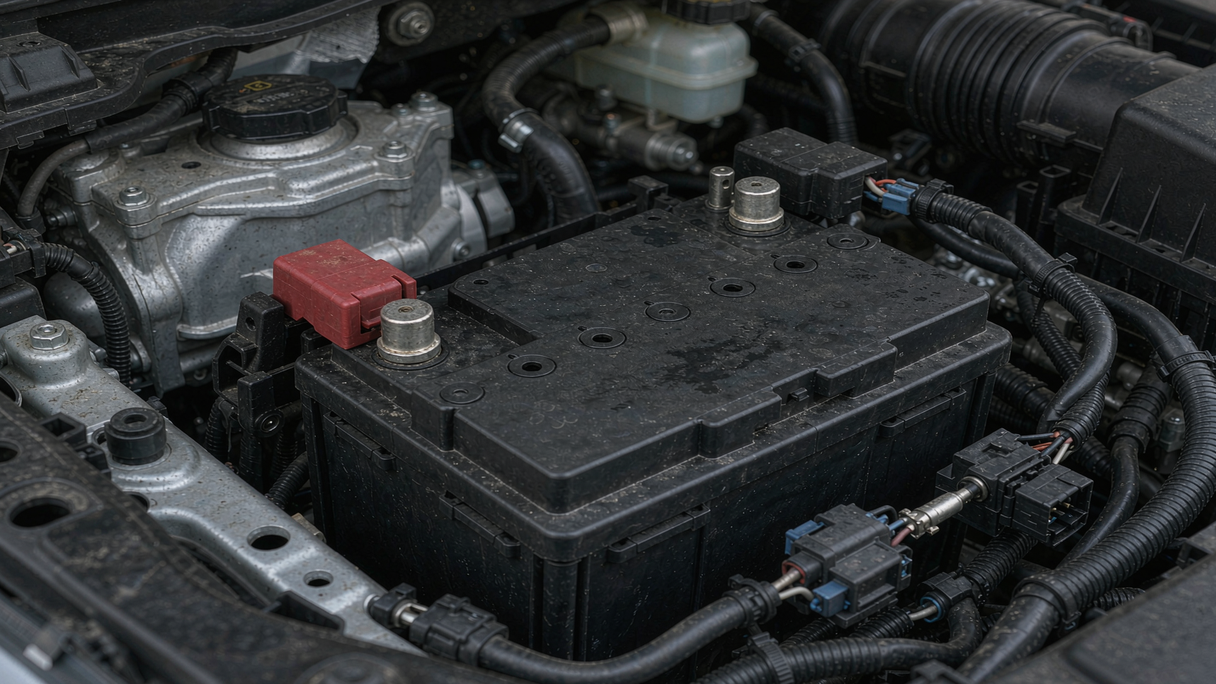
On August 24, Camel Group Co., Ltd. (Shanghai Stock Exchange: 601311.SH) announced via its official website and PR Newswire that its 12V sodium-ion battery business has been selected for a pre-development project with a major European automotive manufacturer, bringing the company's sodium-ion battery technology into the OEM's technology development and validation process for next-generation low-voltage applications. According to the press release, the project builds on Camel Group's engineering development of cylindrical sodium-ion cell samples and its established small-batch production capabilities; it follows the adoption of Camel Group's 12V lithium-ion batteries by major European automakers and represents another step in the company's overseas R&D collaboration in next-generation low-voltage battery technology.
With more than four decades of experience in low-voltage batteries, Camel Group has developed a multi-technology product portfolio spanning conventional lead-acid, EFB, AGM, 12V lithium-ion and 12V sodium-ion batteries. In sodium-ion technology, the company has completed the engineering development of cylindrical cell samples and established small-batch production capabilities. Camel Group is also the lead proposing organization for the international standard proposal '12 V Sodium-ion Batteries for Automotive Start-Stop Applications', which was unanimously approved by IEC/TC21 and has formally entered the international standardization process.
Sodium-ion batteries are attracting growing attention in automotive applications due to their resource availability, low-temperature performance and cycle-life potential, and European automakers' increasingly demanding requirements around low-temperature operating conditions, evolving battery regulations and decarbonization are driving continued exploration of alternative technologies for low-voltage battery systems.
The core fact of this event is that Camel Group's 12V sodium-ion battery has entered a European OEM pre-development process — an early development and validation stage that does not yet constitute a volume-production nomination.