At 11:34 on August 21, the Maoming Municipal Ecology and Environment Bureau published on the Maoming Municipal People's Government portal a notice of its intention to approve the EIA for Maoming Chuangneng Xitan Technology Co., Ltd.'s project producing 50,000 t/y liquid crystal high-carbon materials, 2,000 t/y sodium-ion battery anode materials, 2,000 t/y lithium battery anode materials and 1,000 t/y super microporous carbon, with a five-working-day public consultation period running from August 21 to August 28, 2026. This is a key milestone in the project's EIA approval process — after the consultation period closes, the bureau will make a formal decision on whether to approve.
Located at the middle section of Jinhui Avenue, Jinshan Street, Gaozhou City, Maoming City, Guangdong Province (Guangdong Gaozhou Jinshan Economic Development Zone), the project plans to demolish the original oil storage tank area of the former Maoming Chuangneng Fuel Chemical Co., Ltd. And build new production workshops on the cleared and reserved land, deep-processing ethylene tar, catalytic slurry and medium-temperature pitch. The product mix is led by 50,000 t/y of liquid crystal high-carbon materials, alongside a planned 2,000 t/y sodium-ion battery anode material line, 2,000 t/y lithium battery anode materials and 1,000 t/y super microporous carbon.
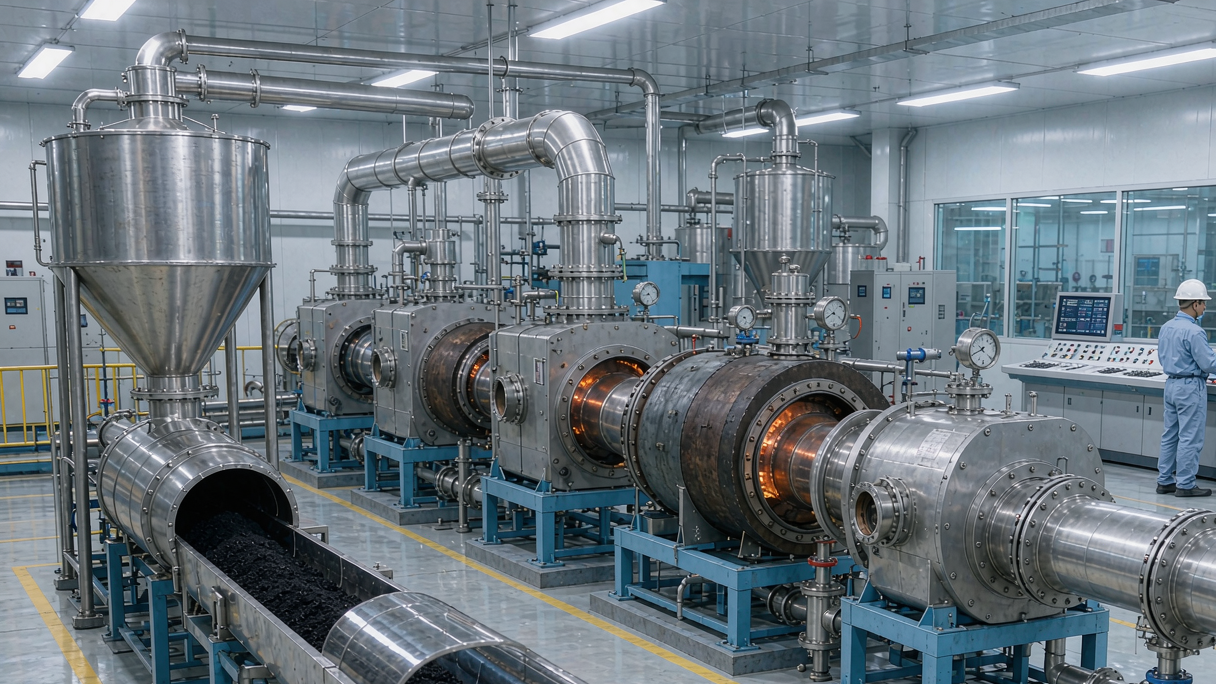
Main facilities include extraction-separation units, thermal condensation units, milling-granulation units, carbonization units and supporting environmental protection facilities. According to the EIA report, exhaust gas will be treated through high-efficiency low-nitrogen combustion devices, thermal oxidizers (TO) and bag filters before discharge, and an 800-cubic-meter emergency accident pool is planned; the EIA was prepared by Guangzhou Bihang Environmental Protection Technology Co., Ltd.
An EIA "pre-approval publicity" is a key administrative approval milestone, but "intended approval" is not yet a formal approval — if objections are raised during the consultation period, the approval process could be affected, and the project can only move into subsequent construction procedures after the formal decision is issued. The planned sodium-ion anode material capacity here is modest (2,000 t/y) — it is a supporting line rather than a large-scale sodium battery materials base — and the project is dominated by liquid crystal high-carbon materials, with the sodium-ion anode as just one product line.