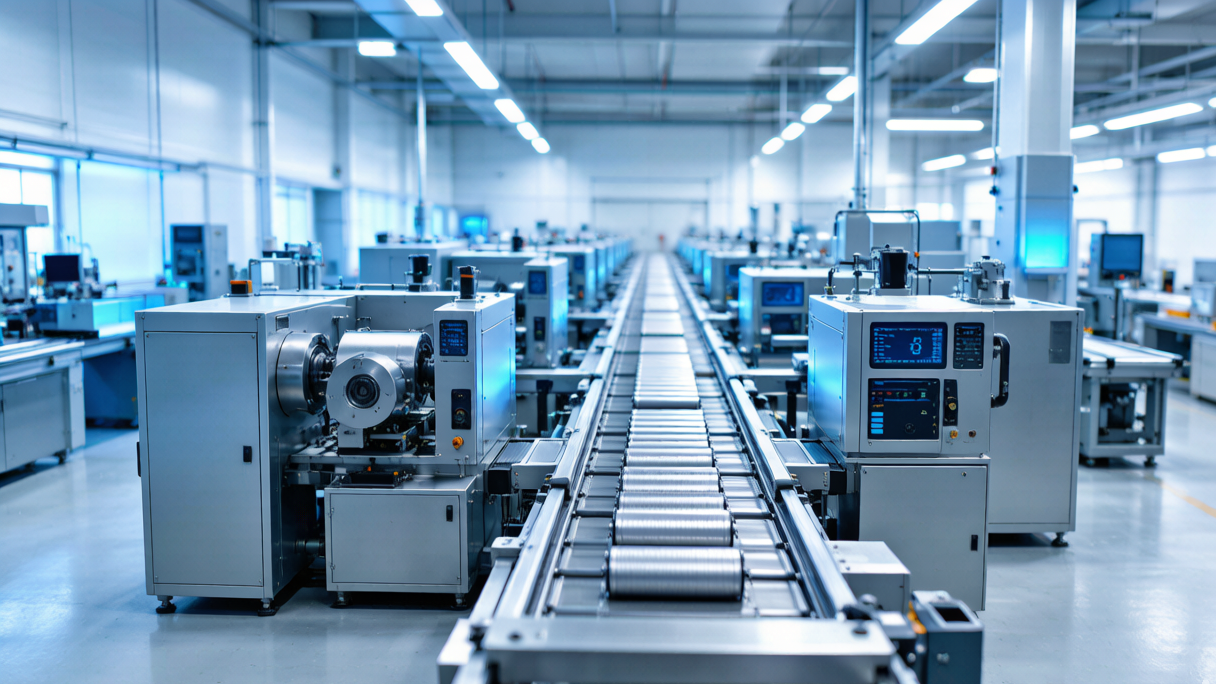
According to Guizhou Daily's August 20 report "Tongren, Guizhou: Production Lines Running Full Speed, Industry Climbing Up", Phase I of Weifang Energy New Materials Technology Co., Ltd.'s 20GWh sodium-ion battery project has entered the final pre-production stage. Located in Dalong Economic Development Zone, Tongren City, Guizhou Province, the project started trial operation at the end of June. Since then, the zone has adopted a leadership-responsibility and door-to-door service model to coordinate land, water, energy and approval issues. According to project head Qin Yang, Phase I has a total investment of RMB 500 million and will build a 500-meter intelligent cell production line, capable of producing 1GWh of sodium-ion batteries per year with annual output value exceeding RMB 500 million at full capacity.
From a project background perspective, Weifang Energy is a key company in Guizhou's sodium-ion battery industry layout. The 20GWh project leverages Tongren's abundant manganese resources (proven reserves of nearly 850 million tonnes, among the largest in Asia) and the new functional materials industrial base of Dalong development zone. Tongren has made new functional materials its top-priority industry, gathering 89 large-scale enterprises including CNGR Advanced Material, Huicheng New Materials, Jia Shang New Energy, Zhongke Xingcheng and Kaijin New Energy. The sodium battery project will form synergies with upstream supporting industries such as cathode materials and electrolytes in the park, and is part of Guizhou's "one core, five zones" new functional materials industrial layout.
This suggests that after its lithium materials industry, Guizhou's sodium-ion cell manufacturing capacity is entering the phase of landing and delivery. "Final pre-production stage" indicates that line construction and commissioning are nearing completion, but the line has not yet officially commenced production. The 20GWh figure is the project's overall planned capacity, of which Phase I is only one-twentieth; subsequent expansion depends on Phase I operations and market demand.