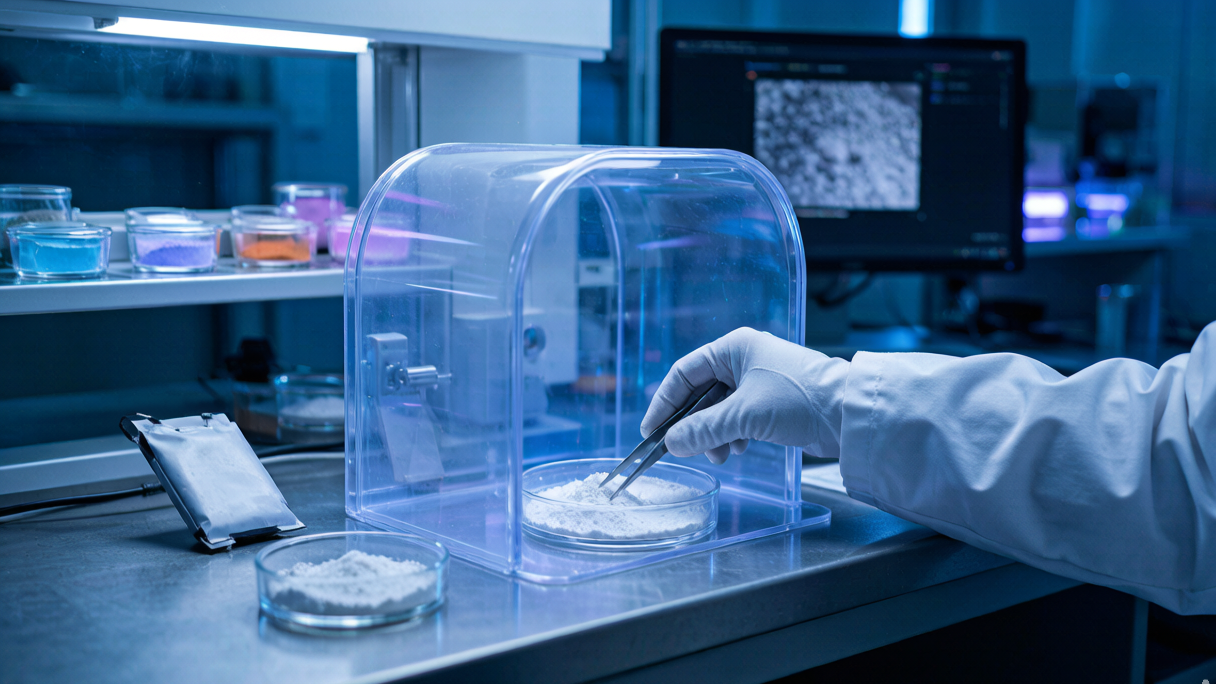
External media report (SodiumBatteryHub, August 20): A new study published in Nature Energy shows that iron-mediated lattice-oxygen redox can significantly raise the energy density of sodium-ion batteries with layered oxide cathodes while maintaining structural stability. The team designed a layered oxide cathode with the composition Na2/3Mn7/12Mg1/4Fe1/6O2, using the Fe4+/Fe2+ couple as an internal electron mediator during charge/discharge to guide lattice-oxygen charge storage along a more controlled path and avoid leaving oxygen in highly unstable states.
With this design, oxygen-redox reversibility reached 99%, versus about 75% for the control design without full mediation. The team also demonstrated a sodium-ion pouch cell with an energy density of 206 Wh/kg and 87.8% capacity retention after 100 cycles at 50 mA/g. The paper, titled "Iron-mediated reversible lattice-oxygen redox enables stable 200 Wh kg−1 sodium-ion batteries", was published in Nature Energy (2026), DOI: 10.1038/s41560-026-02112-8.
From a technical perspective, layered oxides are one of the most promising cathode families for sodium-ion batteries, but conventional transition-metal redox offers limited capacity. Lattice-oxygen redox is considered a route to unlock higher energy, with the difficulty lying in the reversibility of oxygen reactions and structural stability. In this work, iron plays a dual role as both a transition-metal component and a redox mediator: the Fe4+/Fe2+ couple shuttles charge between the metal framework and the oxygen sublattice, making the oxygen-redox cycle more reversible. The pouch-cell result of 206 Wh/kg — a format closer to real battery architecture than a simple lab coin cell — shows the chemistry performs beyond proof-of-concept. It should be noted that this is an academic achievement still at the laboratory-validation stage, far from commercial mass production; neither the material system nor the manufacturing process has entered the industrialization phase.
This offers a new design paradigm for raising the energy density of sodium-ion cathode materials — releasing lattice-oxygen capacity through a controlled internal redox mediator, rather than relying solely on transition-metal components.