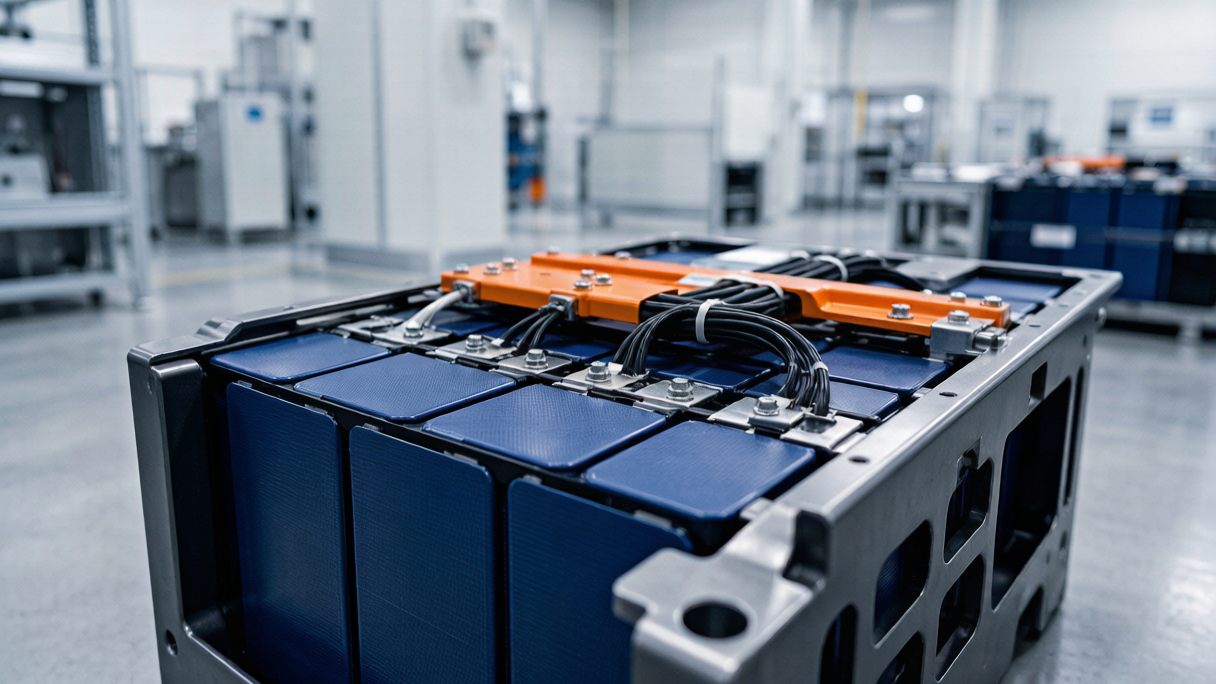
Foreign media report (Securities Times, T2 financial outlet, via People's Finance News, August 14, 2026): On August 13, 2026, Desay Battery (000049.SZ) replied via the Shenzhen Stock Exchange investor interaction platform to investors' question on 'the company's current sodium-ion battery production volume and whether its sodium-ion battery technology ranks in the industry's top tier', stating that its subsidiary Hunan Battery has been conducting R&D and trial production of sodium-ion battery products, and that sodium-ion battery products have achieved megawatt-scale deliveries. Securities Times, National Business Daily, Sina Finance, Securities Star and JRJ among other financial media reported this reply on August 14.
From a corporate background perspective, Desay Battery is a Shenzhen Stock Exchange main-board listed company (000049) whose core business focuses on lithium battery battery management systems (BMS) and pack integration, with product applications spanning smartphones, tablets, laptops, smart wearables, power tools, smart home and mobility, energy storage and new-energy vehicles. According to the company's official website, its application domains explicitly include energy storage, although no dedicated sodium-ion battery product line has been disclosed previously. The reply concerning its subsidiary Hunan Battery conducting R&D and trial production of sodium-ion battery products and having achieved megawatt-scale deliveries represents Desay Battery's first public progress update on a new battery system beyond its core lithium battery business; previously, the company had not disclosed specific delivery scale, customer information or capacity plans for sodium-ion products.
The company did not disclose specific delivery customers, project names, battery models, capacity scale, application scenarios or amounts; 'megawatt-scale' is a qualitative description (corresponding approximately to system scales of 1 MW and above, covering energy storage, backup power, low-speed electrification, and similar scenarios) and does not equal scaled revenue contribution, with limited impact on the company's current-period results.