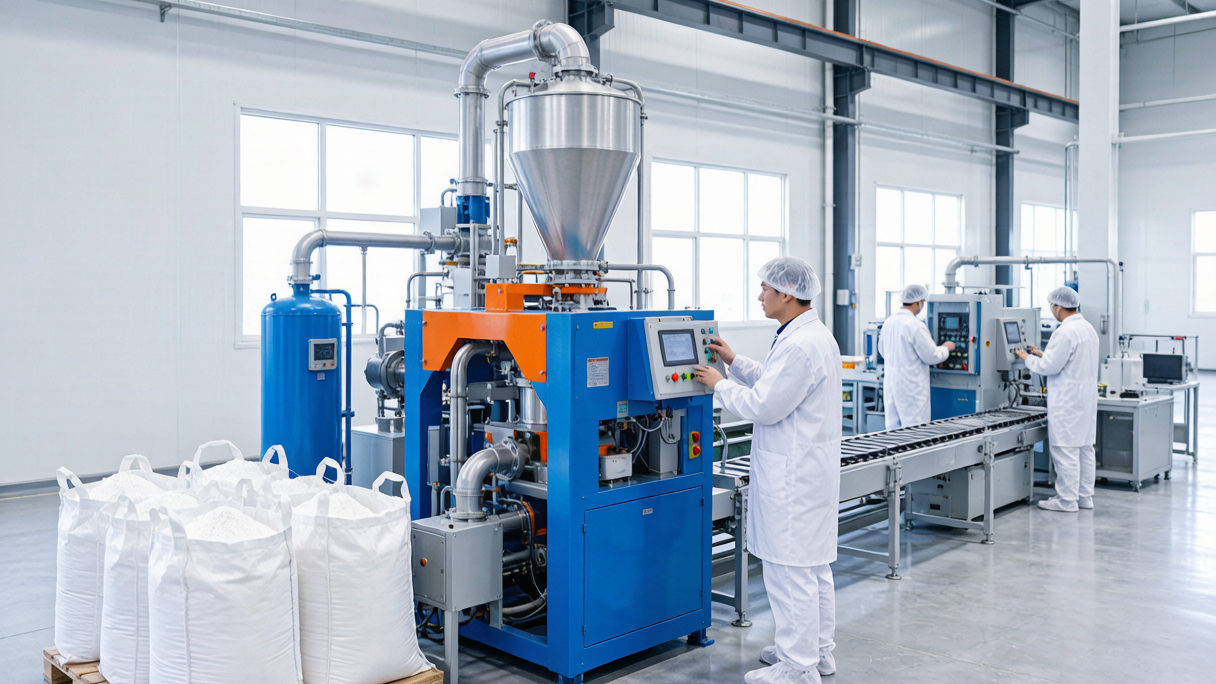
According to the first environmental impact assessment (EIA) information disclosure published by the Zhijin Branch of Bijie Municipal Ecology and Environment Bureau on August 10 and a report by BJX Energy Storage on August 11, Guizhou Nabang New Energy Co., Ltd. Has entered the EIA publicity stage for its "100,000 t/y sodium-ion cathode material production base project (Phase I, first stage)." The disclosure shows that the project is located in Zhijin Economic Development Zone, Bijie, Guizhou (Anle Community, Chadian Township).
The first stage of Phase I involves a total investment of RMB 108.3844 million, covering the rental of a plant to build one sodium-ion workshop (including finished-goods warehouse) plus supporting electrical, instrumentation, water supply/drainage, fire protection and informatization works, with an annual production capacity of 5,500 tonnes of sodium-ion cathode material (polyanionic type) after completion. The Phase I project plans a total capacity of 25,500 t/y; this disclosure is the first stage of the EIA process.
From the project entity perspective, Guizhou Nabang New Energy Co., Ltd. Was established on February 4, 2026 with a registered capital of RMB 100 million, and is a wholly-owned subsidiary of Hunan Nabang New Energy Co., Ltd. Hunan Nabang was founded in June 2021, originating from technology transfer at Central South University, and is one of the top ten science and technology projects of Hunan Province in 2025; it holds more than 34 invention patents related to sodium-ion cathode materials. The company built a kilotonne-scale sodium-ion cathode production line in the second half of 2023, focusing on next-generation NFPP (sodium iron pyrophosphate) cathode materials, claiming parameters such as high electrode compaction, discharge capacity above 103 mAh/g, 2.8V plateau capacity above 98 mAh/g, zero decay over 800 cycles (predicted life ≥30,000 cycles), with samples sent to multiple mainstream sodium battery customers for testing and evaluation.
However, it should be noted that this is only the first EIA information disclosure, the initial step of the pre-construction approval process; there is still a long way to go before EIA approval, construction and commissioning. The performance parameters in the disclosure are company-claimed figures without third-party batch verification, and the planned capacity of 25,500 t/y cannot be directly equated with actual ramp-up.