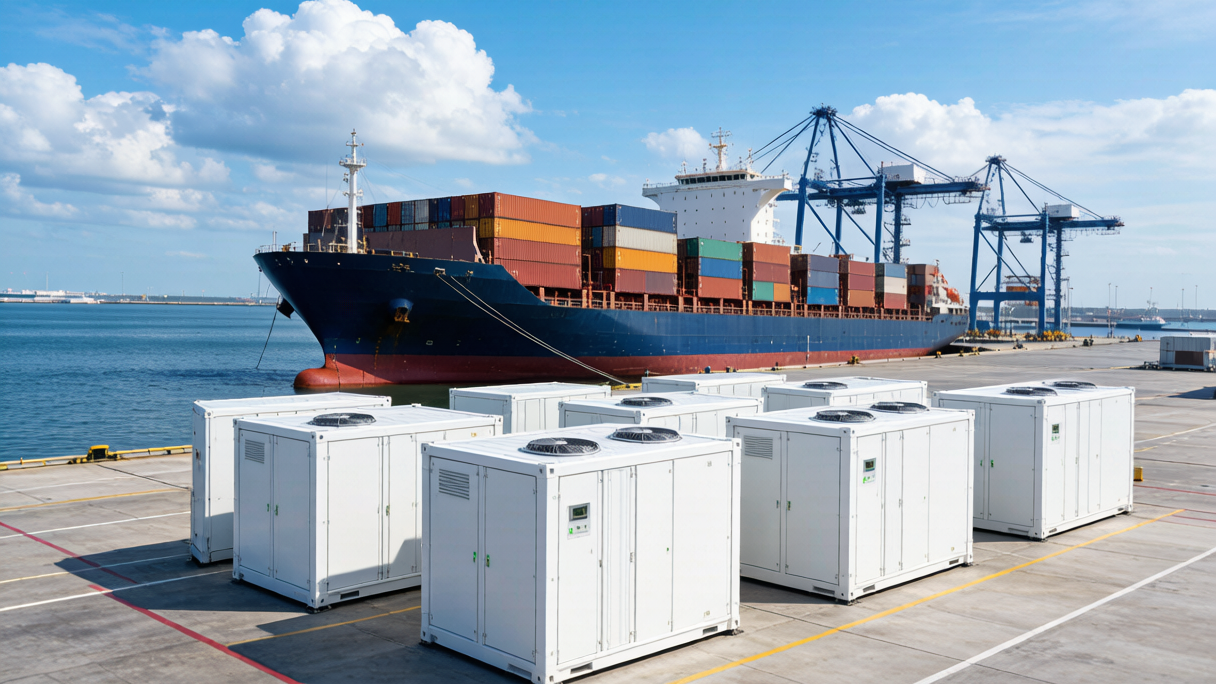
On August 6, 2026, Xiamen MSA, Xiamen Port Authority, Xiamen Municipal Commerce Bureau and Xiamen FTZ Administrative Committee jointly issued the v2.0 Maritime Safety Transport Guidelines for Containerized Lithium Battery Energy Storage Systems at Xiamen Port. As an upgraded version of China's first maritime safety transport guideline for containerized energy storage systems, the new guideline adds sodium-ion batteries and hybrid battery products to the applicable scope, explicitly allowing both pure sodium and lithium-sodium hybrid energy storage containers to be transported in accordance with the guideline. It also upgrades safety technical standards including thermal runaway prevention and non-standard container body inspection, and refines guidance on state-of-charge at departure and real-time monitoring and early warning.
Against the backdrop of rapid growth in energy storage container exports and accelerating adoption of new battery technologies, Xiamen Port has exported more than 860 energy storage containers cumulatively in 2026, up over 100% year on year, with products moving toward larger capacity and higher energy density and a growing variety of carrier vessel types. Meanwhile, sodium-ion batteries have been included in the IMDG Code as Class 9 dangerous goods, which requires higher professionalism and safety in transport. The new guideline fully aligns with Amendment 42-24 of the IMDG Code and the latest national and industry standards, adds control rules for large-batch transport by multi-purpose vessels, details requirements for on-deck stowage and stacking, crew special training and terminal operation qualifications, and supports land-sea intermodal and water-water transshipment modes.
The implementation of transport specifications is a supporting condition for the scale-up of sodium-ion exports; its significance lies in reducing logistics uncertainty rather than directly creating market demand.